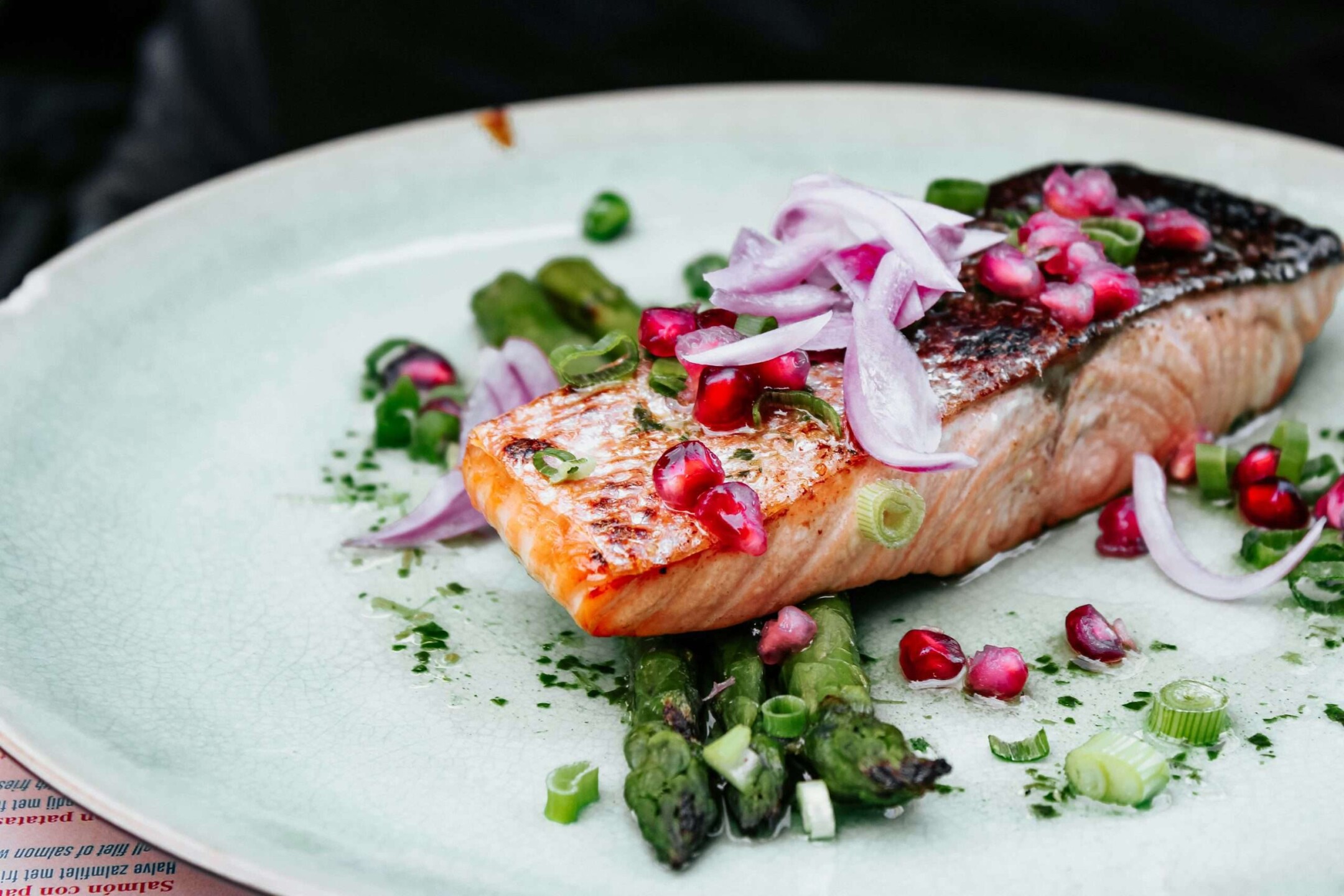
Salmon is universally known as a healthy food loaded with nutrition.
You may think that all is created equal, but the salmon’s origin is an important distinction when it comes to nutrition.
Farmed salmon is typically Atlantic.
Wild-caught salmon meanwhile, is usually one of five types of Pacific: king, sockeye, coho, pink or chum.
Which is healthier?
Wild-Caught:
USDA nutritional data shows wild-caught salmon to be a healthier choice than farm-raised. In comparison to farm-raised, wild caught has:
- More minerals
- Less saturated fat
- Less sodium
Farm-Raised:
- Often live inside overcrowded pens and are fed a processed diet of fatty (often synthetic) feed.
- Lower quality of life and a higher prevalence of disease, which is a rarity for wild stocks.
- Farm-raised also contains higher concentrations of chemicals. Without artificial dye, the fish would be a pale grey color. Pollutant levels of PCB (polychlorinated biphenyl) have shown to be 16 times higher in farmed fish than in wild fish.
If you like the taste of farmed-raised better than wild, try King Salmon first as you transition over to wild. You can also try canned wild salmon. Most restaurants carry farm-raised because it is less expensive and more available but start asking your server if the salmon is farm-raised or wild. The more we ask, the more options become available.
If you are interested in a personalized approach to optimize your diet that aligns with your goals, let’s chat!